


Print this page — Done printing
OR search: Catalog | Databases | Internet
Humanities Department

Literary Criticism for High School and College Students

Do you need to write an A+ literature research paper about a well-known author and his or her works? Does your instructor expect an outline and note cards for your paper? What is literary criticism and where do you find it? How do you write a thesis statement? These are some of the typical questions you might have before beginning a literature research paper. Read on for the answers to these questions and other helpful information.

What is Literary Criticism?

  • Literary criticism is fundamentally an informed analysis and evaluation of a work of literature.
  • Literary criticism can be applied to novels, short stories, poetry, plays, and essays.
  • There are several "schools" of criticism, including: Formalism, Freudian, Marxist, feminist, and deconstruction, among others. (See Dictionaries of Literary Terms for more information.)

What is a Thesis Statement?

According to the Literature Resource Center, a thesis statement is a declarative sentence which 

  • Focuses on one well-defined idea or hypothesis.
  • Makes an arguable assertion; is capable of being supported.
  • Prepares readers for the body of the paper and foreshadows the conclusion.

The Literature Resource Center (LRC)

The Literature Resource Center is an online full-text database that:

  • Accesses biographies, bibliographies and critical analyses of more than 120,000 authors from every age and literary discipline.
  • Provides novel, short story, drama, poetry, and some non-fiction criticism and interpretation.
  • Offers poetry explication.
  • Has entries for each work that contain:
    • Names and profiles of the characters.
    • Overviews of themes, style, and technique.
    • Critical evaluations.

It is an invaluable electronic resource for high school and undergraduate students. You can access the Literature Resource Center at any Enoch Pratt Free Library branch or from your computer at home with a Pratt Library Card. Just click on the “Databases” link on the Library’s home page. You can also check with your local public or college library about accessing the LRC.

Advanced undergraduate and graduate students will also be interested in the MLA (Modern Language Association) International Bibliography.

There are a number of ways to search Gale’s Literature Resource Center, including by:

  • Name of Work,
  • Person,
  • Keyword,
  • Time Period,
  • Content Type (Criticism, Overviews, Reviews, etc.)

Full text articles originally published in Contemporary Authors, Contemporary Literary Criticism, and The Dictionary of Literary Biography are available here.

To get the most out of this database, be sure to use the preselection features found on the Basic Search page to get precisely the results you want.

MLA (Modern Language Association) International Bibliography

The electronic MLA International Bibliography database:

  • Contains bibliographical records or citations dating from 1963 to the present on modern languages, literature, folklore, and linguistics.
    • The print version, available in the Humanities Department, dates from 1923.
  • Has citations of chapters from books, journal articles, and dissertations.
  • Is international in scope.
  • Is the most scholarly of all bibliographies, print or electronic, dealing with literary topics.
  • Is updated ten times a year.
  • Unlike the Literature Resource Center, which is full-text, the MLA database provides bibliographic citations only.

You can access the MLA International Bibliography at any Enoch Pratt Free Library branch. Just click on the “Databases” link on the Library’s home page. You can also check with your local public or college library about accessing the MLA International Bibliography.

Novels, Short Stories & Other Prose Resources

Fiction is the subject of many literature term papers. The following resources can be used to help students with their analyses.

Web sites 

Literary Criticism at Library Spot 

  • Links to online literary criticism resources.
  • Links to The Atlantic Monthly, which offers book reviews dating back to the 19th century.
  • Links to Shakespeare criticism, feminist criticism, and American literature research sites.

Literary Criticism from The Internet Public Library 

  • Literary terms and concepts
  • Author information
  • Criticism & Summaries
  • How to
    • Find books and articles
    • Write your paper

Short Story Criticism 

Produced by the Hilton C. Buley Library of Southern Connecticut State University, this site lists numerous paper and online sources specifically about the short story genre.

Print Resources 

The following print resources can be found in the Humanities Department. Although they cannot be borrowed, students can access the information by submitting a request via fax, mail, or by visiting the department.

Beacham’s Encyclopedia of Popular Fiction. Edited by Kirk H. Beetz. Washington, DC : Beacham Publishing, 1996 - . XPN56.P55 A1 1996Q 

A multi-volume set of critical essays on works by authors of current and popular fiction. Each work's social concerns, themes, characters, technique and literary precedents are discussed.

Epics for Students: Presenting Analysis, Context and Criticism on Commonly Studied Epics. Edited by Marie Lazzari. Detroit : Gale Research, 1997. XPN56.E65 E67 1997Q 

Introduces the work and its author, when known. Also gives plot summaries and includes each character’s role in the story. Contains thematic essays as well as information on the style of the epic. Historical context and a section on comparing and contrasting are also included.

Novels for Students: Presenting Analysis, Context and Criticism on Commonly Studied Novels. Detroit : Gale Research, 1997 - . XPN3385.N68Q 

Each chapter focuses on one novel, listing the full name of the novel, the author's name and the date of publication. Each entry contains the following elements: introduction, author biography, plot summary, characters, themes, style, historical and cultural context, critical overview, and sources for further study and criticism.

Short Stories for Students: Presenting Analysis, Context and Criticism on Commonly Studied Short Stories. Detroit : Gale Research, 1997 - . XPN3373.S3845Q 

Part of the popular "for students" series from Gale, each entry provides an introduction, author biography, plot and character summaries, and a discussion of the story's themes, style, and historical context. A critical overview and longer critical articles, as well as a bibliography and suggestions for further reading, are included.

Short Story Criticism. Detroit : Gale Research, 1998 - . XPN3373.S38Q 

Designed as an introduction to major short-story writers of all eras and nationalities, the focus is on the most important published criticism to aid readers and students doing research. Each volume has author, title, and nationality indices.

World Literature Criticism: 1500 to the Present: A Selection of Major Authors from Gale’s Literary Criticism Series. Edited by James P. Draper. Detroit : Gale Research, 1992. XPN523.W67 1992Q vols. 1-6 + 2 Supplements 

This series gives a broad selection of literary criticism on major writers over a period of 500 years and covers novelists, short story writers, dramatists, and poets of various time periods and nationalities.

Poetry Resources

Many of the resources listed above can also be used for poetry criticism, especially the Literature Resource Center.

Web sites 

Academy of American Poets Teaching Resource Center 

A well organized collection of links to poetry-related sites, including glossaries of poetic terms and critical essays on poets and their works.

Prose and Verse Criticism of Poetry 

Created by the University of Toronto, a compilation of criticism about specific poems, plus famous essays and poems about poetry.

Sonnet Central 

Reading a sonnet by Shakespeare or another poet? This is a helpful source that discusses sonnets by time period and nationality and has links to commentaries and audio files.

Print Resources 

Poetry Criticism: Excerpts from Criticism of the Works of the Most Significant and Widely Studied Poets of World Literature. Detroit : Gale Research, 1991 - . XPN1010.P62Q 

Multi-volume series covering literary criticism of well-known poems and supplemented by biographical and bibliographical information.

Poetry for Students: Presenting Analysis, Context and Criticism on Commonly Studied Poetry. Detroit : Gale Research, 1998 - . XPN1101 .P64Q 

Information covered in each entry includes an introduction to the poem and its author, a summary, analysis of important themes, and an explanation of literary techniques and movements as they are demonstrated in the poem. Essays providing historical context, a critical overview, and an in-depth critique are also included.

Drama Resources

Many of the resources listed above can also be used for drama criticism, especially the Literature Resource Center.

Drama Criticism. Detroit : Gale Research,1991 - . XPN1601.D59Q 

Covers the most frequently studied playwrights of all eras and nationalities and presents discerning commentary on dramatic works of enduring interest. Each volume has cumulative author and title indices.

Drama for Students: Presenting Analysis, Context and Criticism on Commonly Studied Drama. Detroit : Gale Research, 1998 - . XPN1701.D73Q 

This multi-volume set introduces the student to the play and its author, gives a plot summary, and descriptions of characters and their relationships. Important themes, literary techniques, and movements in the play are analyzed.

Writing Your Paper

When you have found literary criticism for your research paper, you may need further help with your writing. An excellent resource is the Owl Online Writing Lab, which offers help for the following topics:

  • How to start a research paper.
  • Examples of literary topics.
  • Pointers on what makes a good literature paper.
  • Ideas on writing about fiction, developing a thesis, and drafting your essay.

Contemporary’s Writing and Reading the Essay: A Process Approach. Pat Fiene, Project Editor. Chicago : Contemporary Books, 1993. PE1471.C76 1993Q 

Instructions on the stages of writing: pre-writing, drafting, revising and editing. Also useful for checking grammar. This book can be borrowed.

Price, David. How to Write Critical Essays: A Guide for Students of Literature. Oxford, UK : Routledge, 1992. PN81.P54 1992 

Takes students through the entire process of critical essay writing, including examples from student essays. This book can be borrowed.

You will also probably need to create a bibliography of the resources you will be citing. The following style guides can be used for that purpose:

  • The Chicago Manual of Style. 15th ed. Chicago : The University of Chicago Press, 2003. Z253.U69 2003 
  • Gibaldi, Joseph. MLA Style Manual and Guide to Scholarly Publishing. 3rd ed. New York : Modern Language Association of America, 2008. PN147.G444 2008 
  • Turabian, Kate L. A Manual for Writers of Research Papers, Theses and Dissertations. 7th ed. Chicago : University of Chicago Press, 2007. LB2369.T8 2007 

Dictionaries of Literary Terms

The following offer help in defining and understanding literary terms, names of literary movements and schools of literary theory.

Web sites 

Gale Glossary of Terms 

Alphabetical listing including examples and cross-references.

Virtual Salt 

Another thorough glossary of literary terms.

Print Resources 

A Dictionary of Literary Terms and Literary Theory. 4th ed. Edited by J. A. Cuddon. Malden, MA : Blackwell Publishers, Ltd., 1998. XPN41.C83 1998 

Contains definitions of critical terms, literary movements, and literary forms, with examples of each.

Creating a Bibliography 

Assembling a List of Works Cited in Your Paper 

Hosted by Duke University Libraries, this site offers side by side comparisons of citations using the APA, Chicago, MLA, Turabian, and CSE styles.

Research and Documentation Online 

Information contained here includes using MLA, APA, Chicago, and CSE styles to cite and document print and electronic sources.

MLA Works Cited Documentation Guide 

Hosted by Kingwood Library at Lone Star College, this site gives the most up-to-date rules and examples of the MLA citation style for print and online resources.

Ask Us 

If you would like further help in finding literary criticism, e-mail us through our Ask-A-Librarian service, call us at (410) 396-5487 or mail your question to:

Humanities Department
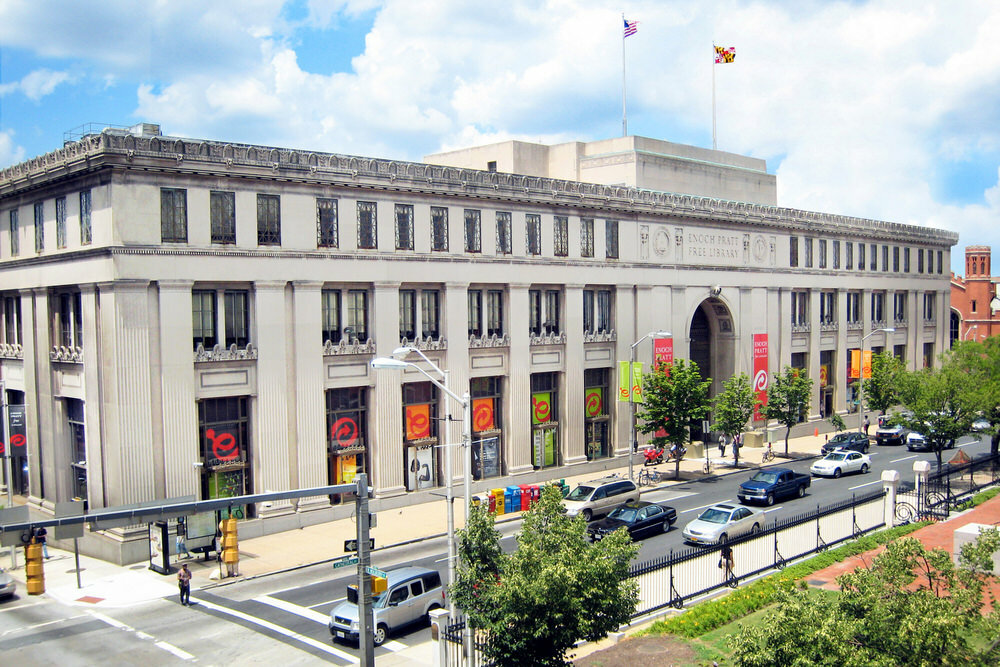
Enoch Pratt Free Library
State Library Resource Center
400 Cathedral Street
Baltimore MD 21201

Print this page — Done printing