




Print this page — Done printing
OR search: Catalog | Internet
Social Science and History Department Collection and State Library Resources

Finding the Value of Old Coins and Paper Money

Has someone ever given you a penny from your birth year as a gift? Have you ever had leftover currency from an overseas trip? If so, you might want to know how much it is worth. The Pratt Library, Maryland's State Library Resource Center (SLRC), has many sources that can help!

This guide covers the following topics: 

What is "value"?

Basically, there are four different types of "value" for coins and bills:

  • Book (or "catalog") value
  • Buy price
  • Retail value
  • Wholesale value

At SLRC, we specialize in finding the "book" value. The book value is an average of many dealers' retail prices for a certain coin or bill - in other words, what the average dealer would sell it for. This price is called the "book" value because you would typically find it in a published book such as the Standard Catalog of World Coins (Iola, WI: Krause, Annual. XCJ1755.K7Q).

Buy price is the price that a dealer would be willing to pay you if you sold him or her your coin or bill.

Retail value is the price for which a dealer would sell a coin or bill to you. So, if a dealer wants to stay in business, he or she usually offers lower buy prices than retail prices.

Wholesale value is the price for which a dealer would sell a coin to another dealer. Wholesale value can also be a discounted price that a dealer would accept from a buyer who is purchasing in large quantities.

Factors that affect value

There are several factors that influence the value of a coin or bill:

  • Rarity
  • Demand
  • Condition

Rarity involves the number (or "mintage") of coins or bills that were originally produced. Rarity also involves the number of those coins or bills that are still around today.

Demand varies according to the popularity and availability of a coin or bill.

  • The demand might be higher or lower in different areas of the world, or during different years.
  • To see demand in action, look at the prices on eBay's coin and paper money "category" page - when more people want to buy a certain item (a high demand), the price often goes up.

The condition or "grade" is very important.

  • Most price guides give values for several grades.
  • Coins and bills can grade from "mint" or "uncirculated" (no signs of wear) to "poor" (you can tell that it's a coin or bill, but that's about it!).
  • When a bill is in mint condition, it is worth more than the same bill in poor condition.
  • There are specific standards that define what "mint," "poor," and other grades mean:
    • If you're interested in coins, see the American Numismatic Association's Official Grading Standards for United States Coins (various publishers, XCJ1832.A51).
    • If you're interested in paper money, refer to the International Bank Note Society's grading standards.

If a coin is too damaged to have value as a collectible, its metal content (the amount of gold or silver in the coin) may have a "basal" value. According to Roderick Hughes' Official Know-It-All Guide, Coins (Hollywood, FL: Frederick Fell, Annual. XCJ1826.F4 2002), you can find out the value of the metal if you:

  • Multiply the weight of the coin
  • times the "fineness" of the coin (the percentage of the coin that is gold or silver)
  • times the current price of the metal.
    • Kitco gives live market quotes for gold, silver, and other metals.

Finding values for world currency

Before you begin looking for the value of a coin or bill, you need to know:

  • Whether the coin or bill is a "general issue" or a "commemorative."
    • Some price guides have separate sections for commemoratives or other "special" issues.
  • Which country issued the coin or bill.
    • A coin or bill's design often includes the name of the country, in that country's official language.
      • Collectpapermoney.com has a list of image, denomination, and keyword "identifiers" that could help you figure out the issuing country.
      • Nations Online offers a list of all the countries of the world and their local names (though in Romanized letters).
    • If you are researching the value of an older coin or bill, keep in mind that the country's name may have changed over time.
  • The date (year) of the coin or bill.
    • Important note: CalendarHome.com offers a calendar that can convert between Julian, Persian, Hebrew, Islamic, and other dating systems to the western (Gregorian) calendar.
  • The condition of the coin or bill (see information on condition, above).

Once you know the date, country, and issue of a coin or bill, you can look up the value in the Pratt Library's price guides!

If you are interested in coin values, try: 

  • Standard Catalog of World Coins, by Chester L. Krause and Clifford Mishler (Iola, WI: Krause Publications, Annual. XCJ1755.K7Q).
    This source covers coins throughout the world, minted from 1901 to the present.

For pricing bills, try: 

  • World Paper Money (3 vols. Iola, WI: Krause, Annual. XHG353.P543). This set has separate volumes for special issues, general issues from the 1300s to 1960, and general issues from 1960 to the present.

If your foreign coin or bill is only worth its "face" value, use OANDA to convert its value to U.S. dollars.

United States coins and bills

Books that cover world coins and bills usually include information on U.S. currency.
However, R. S. Yeoman's A Guide Book of United States Coins (also known as the "Red Book," XCJ1826.G84) is considered the standard reference for U.S. coin values.

Here are some other sources of information about U.S. currency:

  • CoinResource's Coin Encyclopedia is an excellent source for in-depth historical information about American coins.
  • Krause, Chester L., and Robert F. Lemke. Standard Catalog of United States Paper Money (Iola, WI: Krause Publications, Annual. XHG591.K7Q).
  • If you are trying to pinpoint the year a U.S. bill was printed, try Ron Pfiester's Signature Combinations page.
  • If you'd like a detailed understanding of how U.S. coins are graded, see Scott A. Travers' online book, How to Grade U.S. Coins.
  • The U.S. Mint's home page is a treasure trove of information on the history of the U.S. Mint and its various programs. The Mint's Collector's Corner offers a glossary and other basics on coin collecting.

Where to get your coins and bills appraised

If you want someone to grade your coins, there are several companies that do this for a fee. The American Society of Appraisers and International Society of Appraisers have searchable directories of professional appraisers.

A dealer might also be able to helpThe American Numismatic Association's list offers a list of dealerships by state. You might also want to try the Professional Numismatists Guild's Dealer Directory, or the Professional Currency Dealer Association.

If you want someone to appraise your paper money, the Society of Paper Money Collectors recommends that you visit a professional currency dealer.

How to learn more about coins and bills

The Pratt Library can also help you learn about starting a coin or bill collection and finding out about clubs and shows.

If you're starting a coin or bill collection, look at some quality books, Web sites, and magazines. The resources we've already mentioned are a great start.

Here are some other recommendations: 

The Pratt Library's Periodicals Department subscribes to Coin Prices and Numismatist. You could also try these magazines:

There are many other ways to get involved in coin or bill collecting:

Before you buy

Visit your local library and read as much about the hobby as you can. There are a lot of scams out there! The Federal Trade Commission offers a helpful article, "Investing in Rare Coins." The American Numismatic Association has a page of Consumer Awareness Resources.

Also, check the reputation of the dealer you are buying from. Though there are no guarantees, a coin dealer's membership in the American Numismatic Association or the Professional Numismatists Guild is a good sign. Both the ANA and the PNG require their members to uphold a strict code of ethics.

Another good sign is membership in the Better Business Bureau, a nonprofit organization that resolves disputes between customers and businesses. Members of the BBB must adhere to a set of standards. The BBB's Business Reliability Reports can tell you of any disputes that have been reported to the BBB over the last three years.

In Maryland, the Consumer Protection Division of the Attorney General's Office mediates complaints between customers and businesses.

If you need more help

Although the Pratt Library does not appraise coins or bills, we are happy to provide assistance in finding the "book" value for your currency, using print and electronic resources at our library.

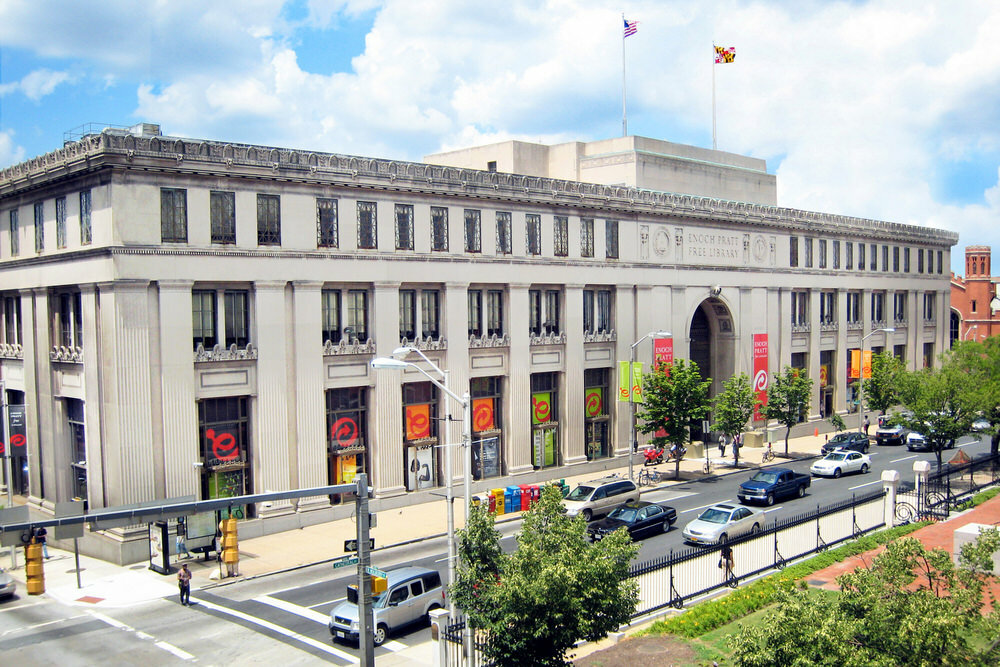
As Maryland's State Library Resource Center, the Pratt Library has a broad collection of resources for coin and bill collectors. What we've mentioned in this guide is only the tip of the iceberg. If you've tried these sources, and you still can't find what you're looking for, please email us, call (410) 396-5430, or contact us by mail:

Enoch Pratt Free Library
State Library Resource Center
400 Cathedral Street
Baltimore, MD 21201

Print this page — Done printing