


Print this page — Done printing
OR search: Catalog | Internet
Maryland Department Collection and State Library Resources

Researching the History of Your House: A Baltimore Case Study

by B. Darylman

When my wife and I bought our home in the Charles Village neighborhood of Baltimore, we were excited to move into an older house with obvious architectural integrity.  Our home had large rooms with very high ceilings, beautiful hardwood floors, oak pocket doors, and mantles with amazing detailed trim, things you just don’t see in newer homes.  Ensconced now in our historic neighborhood and being fairly certain our home was probably close to a hundred years old we became interested in learning about the history of our house.

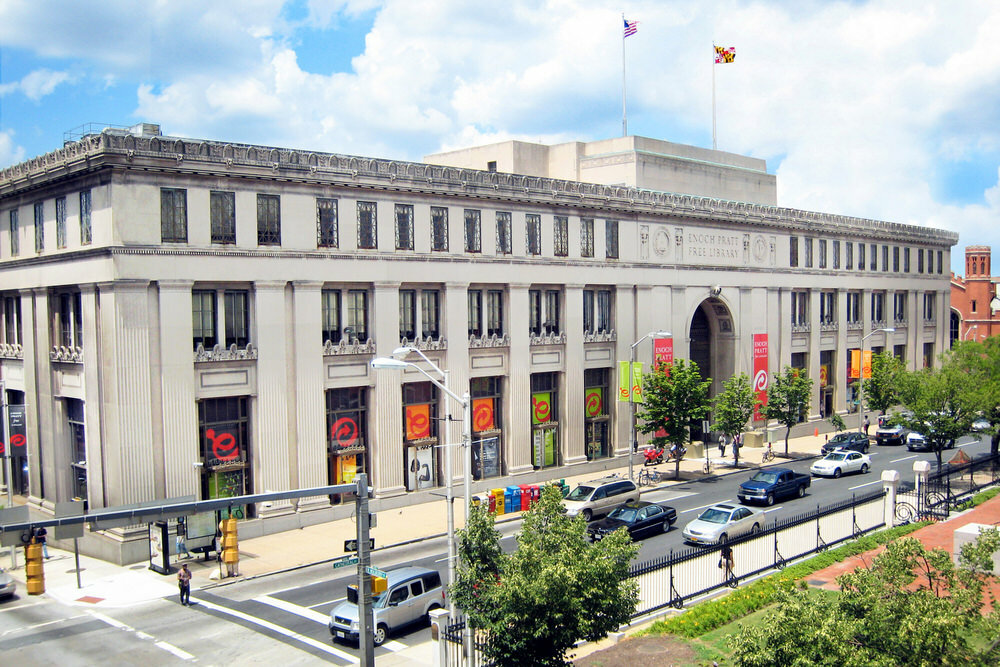
At the Central Branch of the Enoch Pratt Free Library I was directed to the Maryland Department where I could begin my research.  Deciding to start first with a broader history of my neighborhood before trying to zero in on my property the librarians directed me a few books that I would find useful.  The Baltimore Rowhouse by Mary Ellen Hayward and Charles Belfoure was a great place to start, as it is a fascinating story of how rowhomes developed in Baltimore over the years.  It had a section in it mentioning our neighborhood Charles Village, or Peabody Heights, as it was formerly known, and the style of rowhomes that were built there.  It also discussed what various builders and architects had to go through to create such a neighborhood. 
 
Veteran Baltimore Sun reporter Jacques Kelly’s Peabody Heights to Charles Village  about Charles Village had a great deal of useful information.  Kelly spoke about how the neighborhood evolved and how Peabody Heights at its inception was considered to be the threshold to the suburbs as there wasn’t really any urban development north of it.  At the time the neighborhood was being promoted as having “the city house with the suburban advantages,” big homes with front porches and tree-lined streets. Of course now Charles Village is situated basically in the middle of the city. 

The book also provided interesting critiques of the style of architecture that made all the homes in this neighborhood so special.  Kelly went into detail describing all the elaborate “Edwardian” touches, like turrets and intricate parapets that made these homes so unique.  I was also very lucky to find numerous photographs and a register in the back of this book that lists the date, builder, architect and original price of each block in Charles Village.  This was very fortunate because such information is difficult to ascertain sometimes, although many neighborhoods with a rich histories are sometimes written by local journalists. The Periodicals Department at the Pratt Library has a large collection of regional newspapers from across Maryland.

After establishing the background information on my neighborhood it was time to research my home specifically.  I began by searching for my address in the Maryland Department of Assessments and Taxation real property database.  It is linked through the Maryland’s Department’s subject guide to Maryland Real Estate and was very easy to use.  I simply entered my street number and street name, hit enter, and my property’s information was given.  By looking at the assessment records, I discovered my home was built in 1914 along other basic information, such as the building material and amount of square footage.  It also showed me the last few owners of the property and gives the deed reference.

The deed reference is very important as it allowed me to try and establish a chain of ownership. The deed reference is two four-digit numbers preceded by the clerk’s initials.  I then went to the Maryland Land Records Web site, and after registering for a free password, I searched under Baltimore City for my house’s deed.  An image of the deed displayed.  I scrolled down the page until the next deed reference number was located.  This number then was entered, and my homes next oldest deed transfer was shown.  I repeated this process, taking down careful notes about who had previously owned my home. 

The deed search was going well until about 1973 when a realty company bought my home and the next deed number listed was a dead end.  It led me to a list of properties that the real estate company had bought that day, which included my house but didn’t point me anywhere else.  So I switched tactics and started going through the old tax assessment records, which are listed by street address.  The Maryland Department at Pratt holds Baltimore City tax assessment books back to 1935.

Knowing that my house was built in 1914 I knew I was close to finding the original owner so using the Baltimore City Directories I began to look up the last owner listed in the tax assessments to try and find a match.  By doing this I was able to establish the original owner of my house by working backwards through the city directories.  I was lucky because my house stayed in the same family from the time it was built through the 1940s, which wasn’t so uncommon back then. 

Being able to establish the name of the owner I logged onto Ancestry.com, a genealogical database, to search through the 1920 census records to get a more personal perspective on the original owners of my house.  Ancestry.com and Heritage Quest are available at libraries throughout Maryland.  Heritage Quest is free to anyone using Sailor, Maryland’s Public Information Network. I found this part quite interesting as it opened a window in history into who this family was, where they came from, and even what they did for a living. 

After establishing the owners and having a grasp of the general history of my house and neighborhood I thought it would be neat to try and find a picture of my neighborhood or maybe even my block from around the time my house was built.  The Maryland Department’s photo collection had a few pictures of my street a few blocks away from my house that showed how different Charles Village looked back then.

I also was able to locate an old Sanborn fire insurance map of my block that showed the layout of the neighborhood before all the houses in Charles Village were even completed.  By looking through the classifieds in old issues of the Baltimore Sun around the time my house was built I found original ads for houses in Charles Village.  The ads listed the original price of the house and all the amenities that were offered:

Want Ad 

Researching the history of my house was challenging and sometimes frustrating work but satisfying.   By doing library research I got a glimpse at the history of a historic neighborhood like Charles Village and how the houses that make up a neighborhood transformed over time.  


Print this page — Done printing